
← Back to Cowboy House Movers

An American story of ingenuity

How houses
learned to travel.

Long before hydraulic dollies and highway escorts, crews were lifting whole buildings with hand-turned screws, timber cribbing, rollers, patience, and extraordinary coordination.

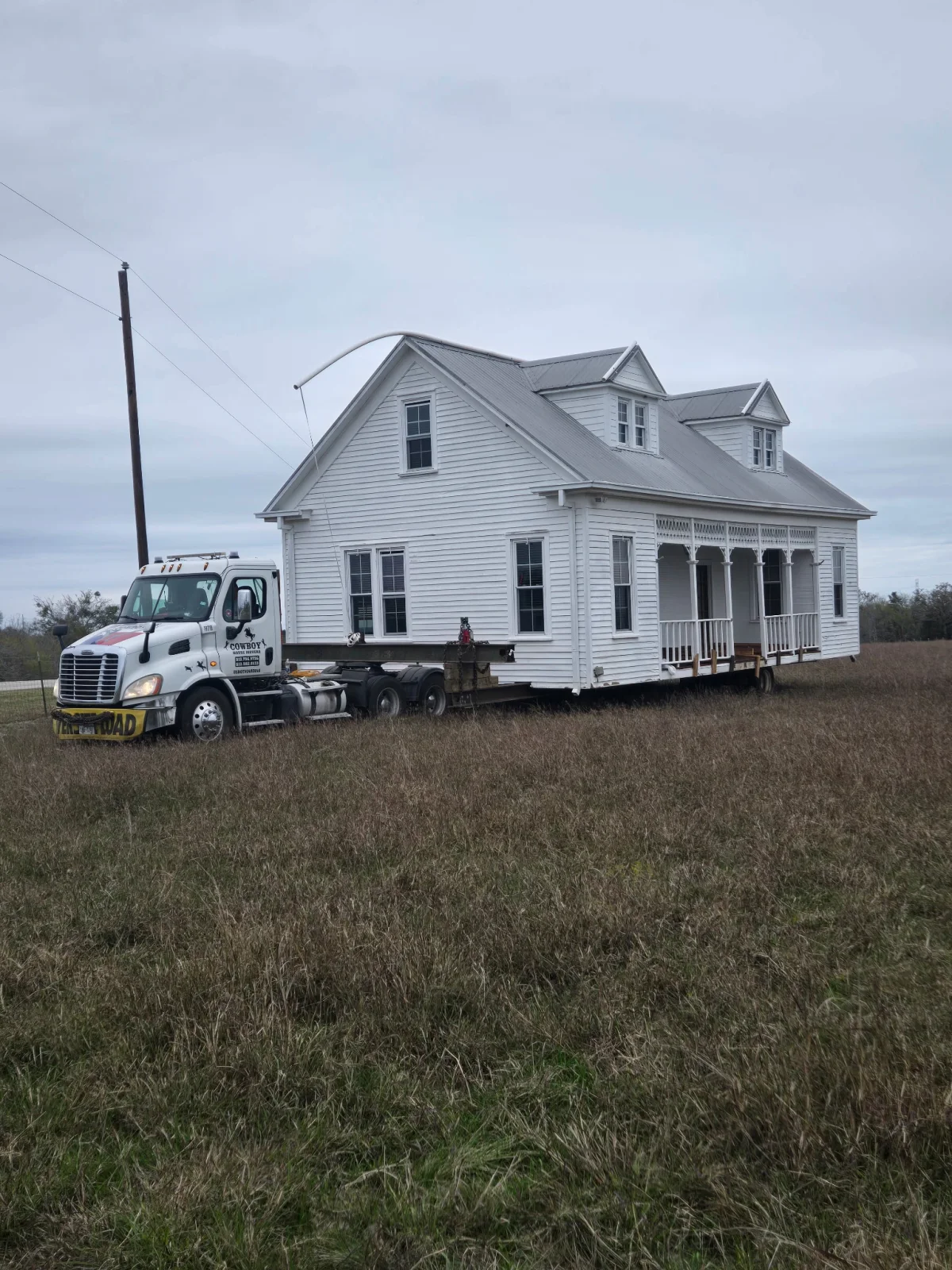
Cowboy House Movers transporting a historic white house in Texas
The tradition continues: a real Cowboy House Movers project in Texas.
1850sChicago raises its streets and buildings
1866A house move is photographed in San Francisco
4,830 tonsCape Hatteras Lighthouse moved intact
2,900 feetThe lighthouse's 1999 journey inland

The basic idea

The building stays whole. Its address changes.

Structural moving is different from taking a building apart and rebuilding it. The structure is separated from its foundation, supported by a temporary steel framework, lifted, carried to a new location, and placed onto a prepared foundation.

The machinery has changed dramatically. The central discipline has not: understand how the structure carries weight, support it evenly, control every movement, and plan the route before anything leaves the ground.

01

Chicago · 1850s

A city rises above the mud.

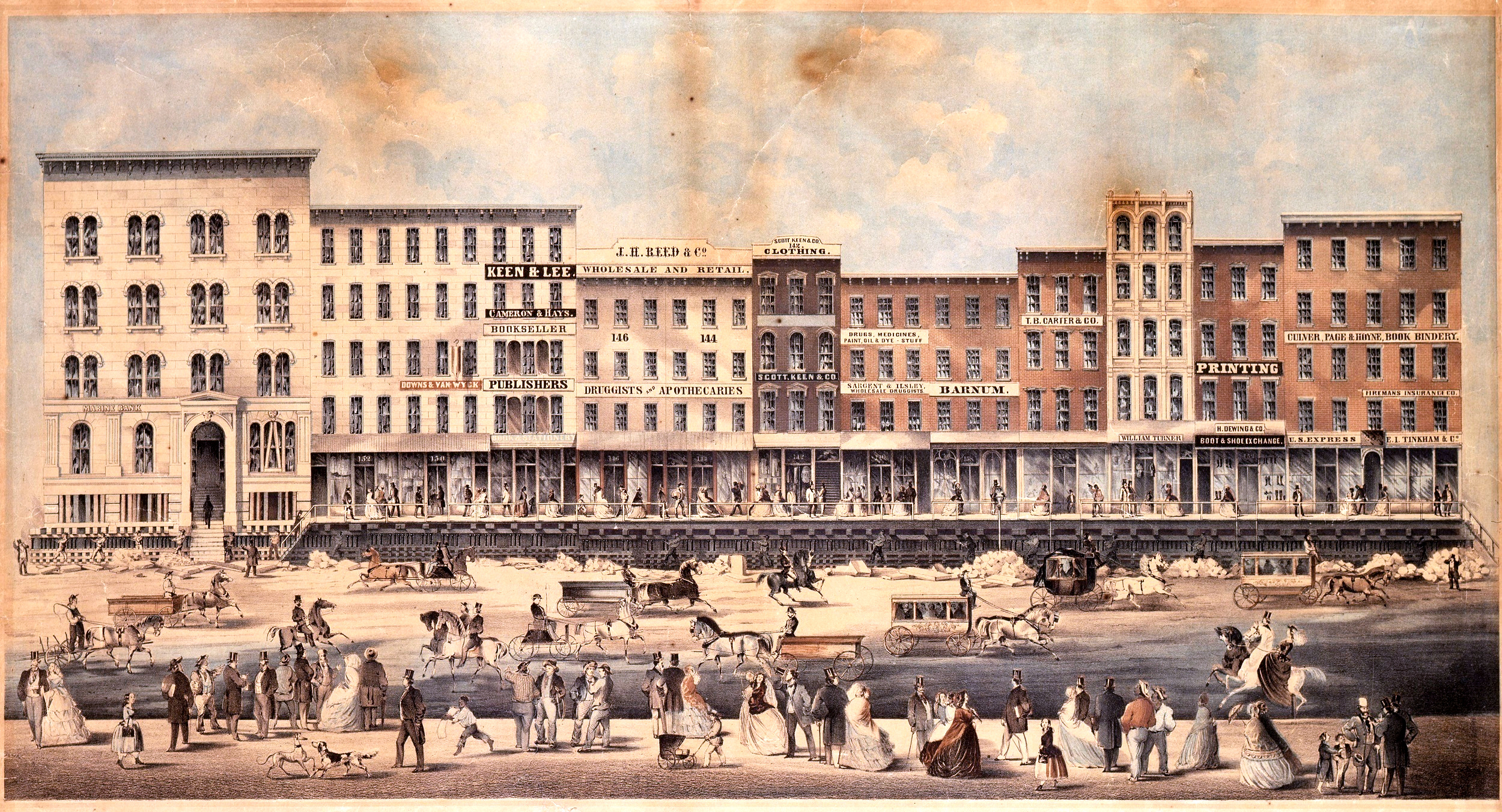
Illustration of a block of buildings being raised on Lake Street in Chicago
Raising a block on Lake Street, Chicago, 1857. Edward Mendel / Chicago Historical Society. Public domain.

Chicago's low, flat ground made drainage nearly impossible. Beginning in the 1850s, the city raised many streets by an average of four to five feet so sewers could drain toward the river.

Buildings had to follow the new street grade. Frame structures were comparatively straightforward, but contractors soon proved that large brick hotels, banks, and entire commercial blocks could also be lifted. Teams placed jackscrews beneath the structure and turned them together in carefully signaled increments.

02

San Francisco · 1866

Relocation becomes visible.
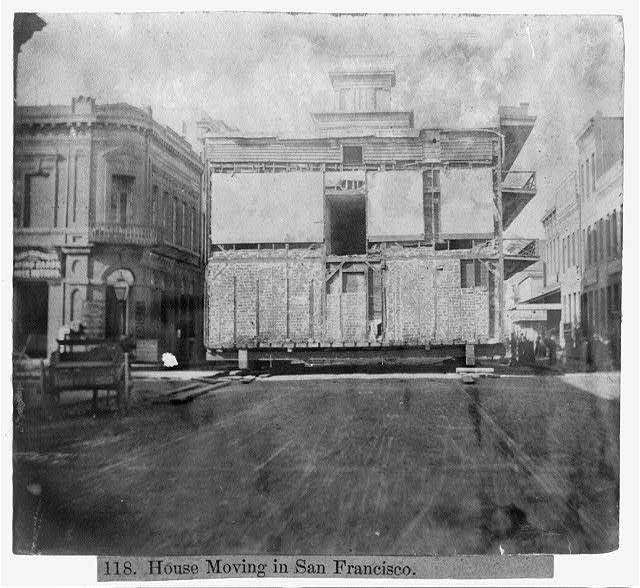
A house being moved through San Francisco in 1866
“House moving in San Francisco,” published 1866. Lawrence & Houseworth / Library of Congress. No known restrictions.

This early photograph records a complete building elevated above the street on a temporary support system. It captures the transition from building raising to true relocation: not merely changing a structure's elevation, but carrying it to a new site.
03

Puerto Rico · 1942

The road needs room.

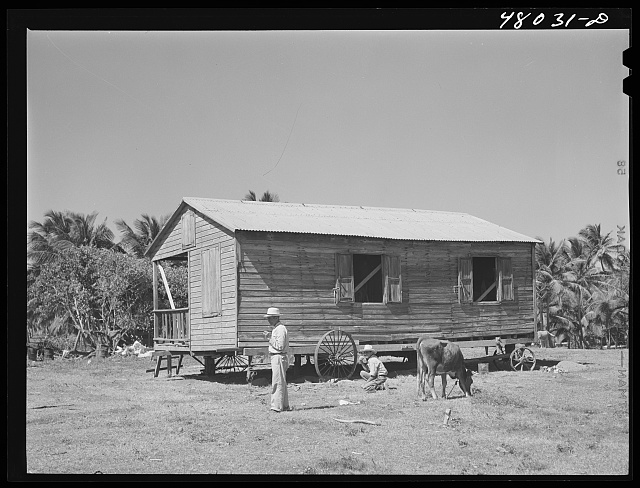
A wooden house prepared to move near Arecibo, Puerto Rico, in 1942
Moving a house near Arecibo, Puerto Rico, January 1942. Jack Delano / Library of Congress. No known restrictions.

Jack Delano photographed this modest wooden house being moved to make way for a new road. The reason feels remarkably current: infrastructure changes, useful buildings stand in the way, and relocation offers a third choice between abandoning the project and destroying the structure.

The method evolves

More control. The same fundamentals.

Hand-turned jacks and timber rollers gave way to hydraulic systems, steel beams, powered dollies, and precise monitoring. Modern equipment allows loads to be balanced and adjusted continuously, but every successful move still follows the same essential logic.

  1. 01
    Study the structure

    Confirm its construction, condition, dimensions, weight paths, foundation, and whether it is genuinely movable.

  2. 02
    Build temporary support

    Insert steel beams, cribbing, and lifting equipment so the load transfers evenly away from the original foundation.

  3. 03
    Plan every foot of the route

    Measure road width, turns, slopes, bridges, utilities, overhead clearances, destination access, and permit needs.

  4. 04
    Move and set

    Transport the supported structure under controlled conditions, then place it onto its prepared destination foundation.

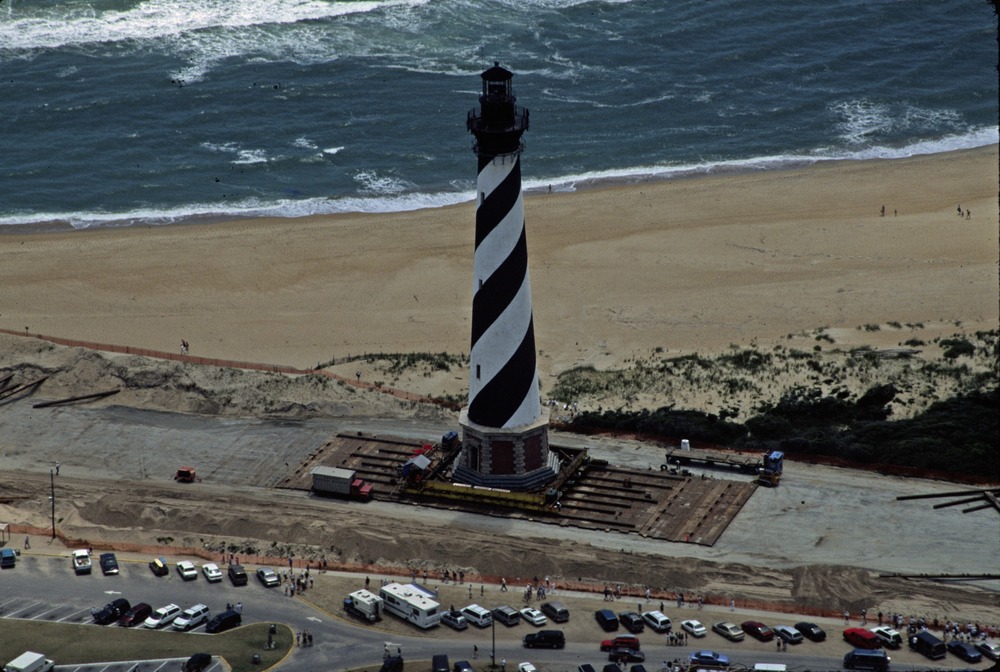
Cape Hatteras Lighthouse being moved inland in 1999
Cape Hatteras Lighthouse moving inland, June 24, 1999. National Park Service / Mike Booher. NPS asset marked public domain.
04

Cape Hatteras · 1999

The move of the millennium.

Shoreline erosion threatened the 1870 Cape Hatteras Lighthouse. After years of study and public debate, the National Park Service moved the 4,830-ton brick tower 2,900 feet inland.

Hydraulic jacks raised the lighthouse six feet onto a steel support system. Rollers carried it along steel tracks while 60 automated sensors watched tilt, vibration, and structural dimensions. Push jacks advanced the tower five feet at a time.

Twenty-three days after the journey began, the lighthouse reached its new foundation. The project is an extreme example, but its sequence—support, lift, transport, set—is recognizable in every carefully planned structural move.

Why the work still matters

Moving a structure can preserve more than a building.

01

Useful housing

A sound house in the wrong location can become a home somewhere else instead of disappearing with the old site.

02

Craftsmanship and memory

Relocation can preserve materials, architecture, and community history that would be difficult or impossible to recreate.

03

Less demolition

The EPA estimated 600 million tons of U.S. construction and demolition debris in 2018. Reusing an entire suitable structure is one practical alternative to treating every building as disposable.

The tradition continues across Texas

Old ingenuity. Modern Cowboy know-how.

From a Central Texas base, Cowboy House Movers brings this long tradition to practical projects across the state. Our current focus is pier-and-beam houses, manufactured and mobile homes, ADUs and tiny homes, and portable structures such as classrooms.

The goal is simple: identify structures worth saving, determine whether a move is feasible, and give sellers, buyers, and landowners a clear next step. Every structure, site, and route is different—so every project begins with a real review.

Research & image sources

Go deeper.

Encyclopedia of Chicago

Street grades and building raising in the 1850s

Library of Congress

House moving in San Francisco, published 1866

Library of Congress

House moving near Arecibo, Puerto Rico, January 1942

National Park Service

The 1999 relocation of Cape Hatteras Lighthouse

U.S. Environmental Protection Agency

Construction and demolition debris data

International Association of Structural Movers

The modern structural-moving profession